
Also Serving South Riding, Aldie, Ashburn, Centreville, Reston, and Herndon
Is Your Dog Limping? It Could Be a CCL Tear.
If your dog has recently started limping, struggles to get up after resting, hesitates on stairs, or just seems less like themselves, one possible cause is a torn cranial cruciate ligament, commonly called a CCL tear or CCL rupture. This is one of the most frequent orthopedic conditions we see in dogs, and tibial plateau leveling osteotomy (TPLO surgery) is the most common procedure performed here at LifeCare Pet Hospital.
Jump to a section:
Our staff veterinarian Dr. Sudhir Ahluwalia, DVM, has performed more than 900 TPLO operations on dogs of all breeds and sizes. Patients travel up to 189 miles to receive care here because we offer the surgical skill of a specialty hospital, honest all-inclusive pricing, and the kind of personal attention you just do not get at a large referral center.
If your dog is showing signs of a knee or stifle joint injury, please do not wait. Early surgery consistently produces better long-term outcomes, and we can usually schedule your consultation and procedure within 1 to 2 weeks.
Call (703) 643-9818 or Book Your TPLO Consultation Online
About Dr. Sudhir Ahluwalia: Your TPLO Surgeon
Dr. Sudhir Ahluwalia has been performing TPLO surgery at LifeCare Pet Hospital since we opened in 2019. He holds both a veterinary degree and a doctoral degree, which means he brings a research-grounded perspective to every canine cruciate repair he performs. He is the surgeon who meets with you at your consultation, performs the procedure, reads the post-operative x-rays, and guides your dog through recovery. There is no handoff to a resident or a rotating surgeon.
His outcomes, combined with straightforward pricing and a genuine commitment to making sure clients understand exactly what is happening, have made him one of the most sought-after TPLO surgeons in Northern Virginia. The video below was made and narrated by Dr. Ahluwalia to walk you through everything: what causes a CCL tear, why it is painful, and how TPLO surgery gets your dog back on their feet.
Watch Dr. Ahluwalia Explain TPLO Surgery
In this video, Dr. Sudhir Ahluwalia, DVM, explains what causes a CCL tear in dogs, how tibial plateau leveling osteotomy works, and what pet owners can expect after canine cruciate surgery at LifeCare Pet Hospital.
A Complete Guide to CCL Tears and TPLO Surgery in Dogs
The following is a written companion to Dr. Ahluwalia's video above, reflecting his words and clinical perspective.
Recognizing the Signs of a Cruciate Ligament Injury
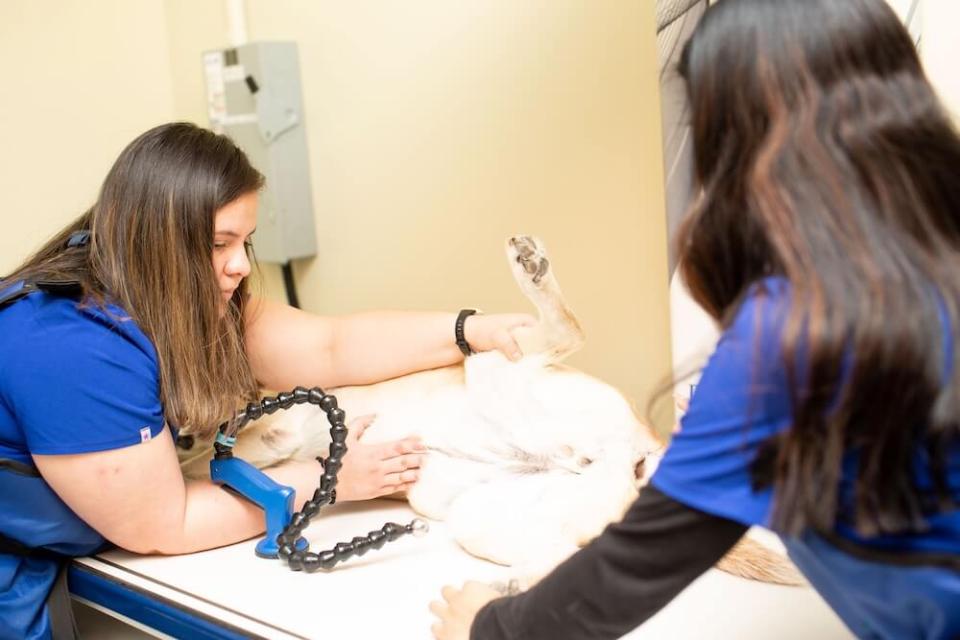
If your dog has recently started limping, struggles to get up after resting, hesitates on stairs, or seems less active than normal, a torn cranial cruciate ligament could be the reason. I want to explain what this injury actually is, why it causes so much pain for your dog, and how TPLO surgery helps most dogs get back to a comfortable, active life.
What Is the Cranial Cruciate Ligament (CCL)?
Dogs and humans both have a cruciate ligament inside the knee. In people, we call it the ACL (anterior cruciate ligament) because humans stand upright and knee mechanics are described as anterior and posterior. In dogs, we call it the cranial cruciate ligament, or CCL, because dogs move on all fours and we use the terms cranial and caudal instead.
The CCL keeps the stifle joint (your dog's knee) stable during walking, running, jumping, and play. It connects the thigh bone (femur) to the shin bone (tibia). Every time your dog takes a step, this ligament prevents the knee from shifting abnormally and holds the joint together.
Inside the stifle, there are also two structures called the menisci. Think of them as cushions or shock absorbers between the bones. They help distribute body weight and protect the joint. When the CCL fails, whether from a sudden injury or gradual CCL disease, the shin bone starts sliding forward each time your dog puts weight on the leg. This is what we call cranial tibial thrust.
I like to use this analogy with pet owners: the cruciate ligament is like the parking brake on a car sitting on a hill. Once it fails, the car wants to roll every time. In your dog's knee, that sliding happens with every step, and it leads to pain, inflammation, muscle loss, and eventually arthritis. As time goes on, the body tries to compensate by building up scar tissue inside the joint, and the meniscus can end up getting trapped and damaged in the process.
How We Diagnose a CCL Rupture: The Drawer Sign and Sedated Exam
The primary way we confirm a CCL rupture is by checking for that abnormal sliding in the knee. With your dog under sedation and fully relaxed, I hold the femur steady and gently push the tibia forward. If the shin bone slides forward in an abnormal way, that is called a positive drawer sign and is one of the hallmark findings of a CCL injury.
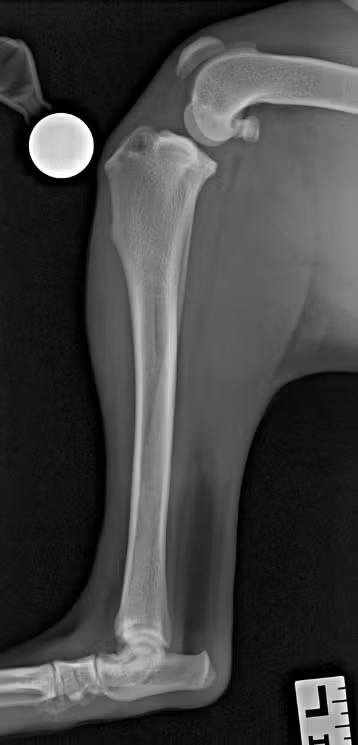
We do a sedated exam rather than checking an awake dog because muscle tension and pain can hide how unstable the joint really is. Once the diagnosis is confirmed, we take specialized x-rays of the stifle joint. Those images let us see how much arthritis is already present, evaluate the joint as a whole, and plan the tibial plateau leveling osteotomy precisely.
What Is TPLO Surgery? How Tibial Plateau Leveling Osteotomy Works
TPLO stands for Tibial Plateau Leveling Osteotomy, and it is the most widely performed orthopedic procedure for CCL tears in dogs. Unlike human ACL surgery, we are not trying to replace the torn ligament. Instead, we change the mechanics of the stifle joint itself so the knee becomes stable on its own, even with the CCL torn. That is the core idea behind TPLO dog knee surgery and what sets it apart from other approaches.
To understand why it works, look at the shape of the top of the tibia. In dogs, the tibia has a natural slope, which we call the tibial plateau. When the CCL is intact, it holds things in place despite that slope. When it tears, the femur slides down the slope with every step, creating the painful instability you are seeing in your dog. The goal of tibial plateau leveling osteotomy is to flatten that slope down to roughly five degrees, removing the force that drives the shin bone forward.
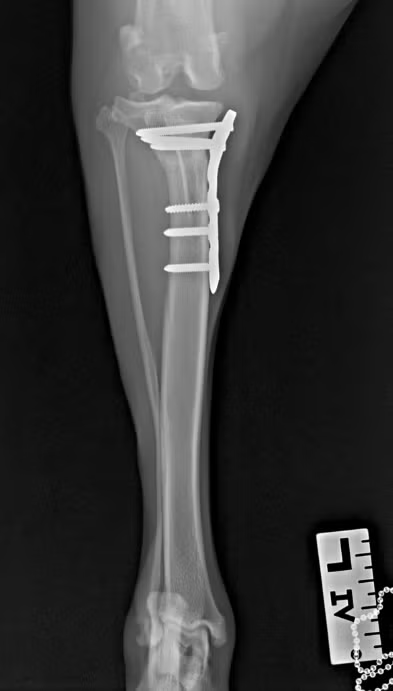
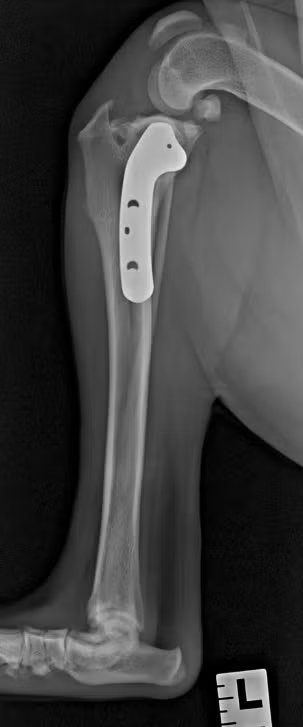
Here is how the surgery works. I plan a precise cut in the tibia at a point where no vital structures are at risk. Using a specialized saw, I make what is called an osteotomy, a controlled cut through the bone. The top portion of the tibia is then rotated to reach the target angle and held in place with a bone plate and screws. We want that bone to fuse in its new position permanently.
Before surgery, x-rays often show a tibial plateau slope of 25 to 30 degrees or more. After TPLO, that slope is at around five degrees. Once healed, when your dog puts weight on the leg, the shin bone stays put. No more sliding, no more pain from instability.
What TPLO Surgery Does and Does Not Do
TPLO surgery does not give your dog a brand new knee, and I think it is important to be upfront about that. Once the CCL tears, some degree of arthritis will develop over time. That process starts the moment the ligament is injured. What TPLO does is stop the ongoing mechanical damage, slow arthritis significantly, and restore your dog's comfort and ability to move normally.
For that reason, tibial plateau leveling osteotomy is considered the gold standard for treating CCL disease in dogs and one of the most successful orthopedic procedures in all of veterinary medicine. The sooner it is done after diagnosis, the better the outcome for your dog's long-term joint health.
TPLO Surgery vs. Other Canine Cruciate Repair Options
Pet owners researching dog knee surgery often come across a few different options: Tibial Tuberosity Advancement (TTA), extracapsular lateral suture repair, and conservative management with rest and medication. Each has its place, but for most medium, large, and giant breed dogs, and for active dogs of any size, TPLO delivers the most reliable long-term results.
Extracapsular repair uses an artificial suture to replicate what the CCL does. It can work for small, low-activity dogs, but in larger or more active dogs the suture material tends to stretch or fail under normal load over time. TTA is another bone-based surgery that changes stifle mechanics, but TPLO has a longer track record and more published outcome data behind it. Conservative management, meaning rest, anti-inflammatories, and physical therapy without surgery, does not fix the underlying instability. Arthritis continues to progress and the dog remains in pain. For most dogs over 20 to 25 pounds, TPLO is the most durable path to a comfortable, active life.
TPLO Surgery Cost at LifeCare Pet Hospital
We understand that deciding on surgery for your dog can feel like a lot, especially when you are comparing hospitals and trying to figure out what different price ranges actually include. In the greater Washington D.C. area, including Virginia and Maryland, the cost of canine cruciate surgery typically runs between $5,500 and $8,500 depending on the facility and what is bundled into the price.
At LifeCare Pet Hospital, we charge one all-inclusive price for TPLO surgery that covers your surgical consultation, pre-operative blood work, the tibial plateau leveling osteotomy, anesthesia, hospitalization, and your eight-week post-operative x-rays. No surprise fees. If you want to know the exact cost for your dog's procedure, call us at (703) 643-9818 and we will walk you through it.
Signs Your Dog May Have a Torn CCL
A CCL rupture tends to get worse without treatment, not better. The most common signs are limping on a back leg, difficulty standing up or sitting down, not wanting to climb stairs or jump into the car, sitting with one leg off to the side, swelling or stiffness around the knee, and a general drop in energy or enthusiasm. Some dogs have a sudden, acute lameness after a specific incident like a hard landing or a fast turn during play. Others start limping gradually as the ligament breaks down over time due to CCL disease, which is more common in certain breeds and in dogs carrying extra weight.
If you are seeing any of these signs, schedule an evaluation soon. Partial CCL tears almost always progress to full ruptures, and the longer the instability goes untreated, the more damage builds up inside the joint.
Breeds Most Commonly Affected by CCL Tears
Any dog can tear a CCL, but some breeds are more prone to it because of their anatomy, body structure, and activity levels. Labrador Retrievers, Golden Retrievers, Rottweilers, German Shepherds, Boxers, and Mastiffs are among the breeds we see most often for TPLO surgery. Overweight dogs of any breed are also at higher risk because of the added force on the stifle joint with every step.
That said, we perform tibial plateau leveling osteotomy on dogs of all sizes and mixed breeds regularly. If your dog has been diagnosed with a CCL rupture or you suspect a knee injury, breed is just one part of the picture. Dr. Ahluwalia will look at your dog's anatomy, weight, activity level, and overall health to determine whether TPLO is the right fit.
Why Prompt CCL Surgery Matters
Waiting on dog knee surgery creates real risks. The continued instability inside the stifle joint breaks down cartilage and menisci faster, and arthritis advances more aggressively the longer you wait. It also shifts extra load onto the opposite hind leg. Roughly 40 to 60 percent of dogs who tear one CCL will eventually tear the other, often because they protect the injured leg by overloading the healthy one.
Getting TPLO surgery done promptly, usually within a few weeks of diagnosis, gives your dog the best shot at full recovery, limits long-term joint damage, and takes some of the pressure off the other leg.
TPLO Recovery Time: What to Expect After Surgery
Recovery from tibial plateau leveling osteotomy is gradual and follows a clear progression. Knowing what to expect at each stage makes the process much less stressful.
In the first two weeks, the priority is strict rest and pain management. Most dogs will start touching the foot to the ground within the first couple of days. That is normal and a good sign, but overall activity needs to stay very limited during this window.
From weeks three through six, controlled leash walks are introduced as the bone begins to heal. Your dog will likely seem more comfortable and may want to do more than they should. It is important to stick to the plan and avoid running, jumping, or off-leash time even if they appear ready.
By weeks eight through twelve, the osteotomy site is typically well into the fusion process. At the eight-week mark, we take follow-up x-rays to see how healing is progressing and decide when your dog can begin returning to more normal activity. These x-rays are included in the cost of your surgery at LifeCare Pet Hospital.
Dr. Ahluwalia reviews those images personally and gives you a detailed picture of where your dog stands in recovery. We also provide a customized rehabilitation plan along with weekly exercise video tutorials to guide you through each phase at home. Most dogs who have TPLO surgery return to full, comfortable activity within the recovery window, and the procedure carries a 95 to 97 percent success rate.
Post-Surgery X-Rays
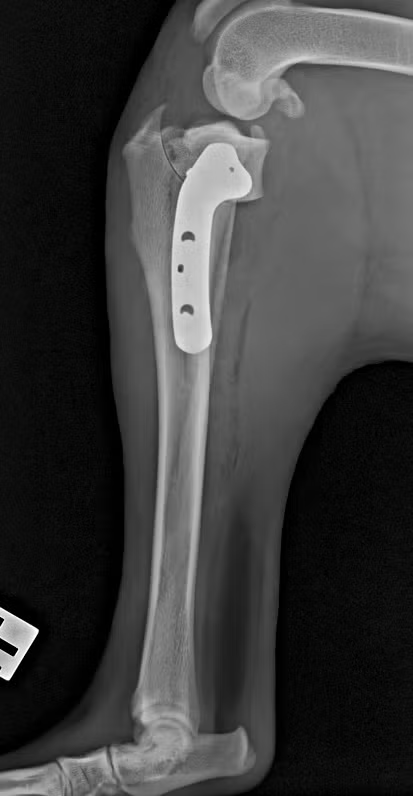
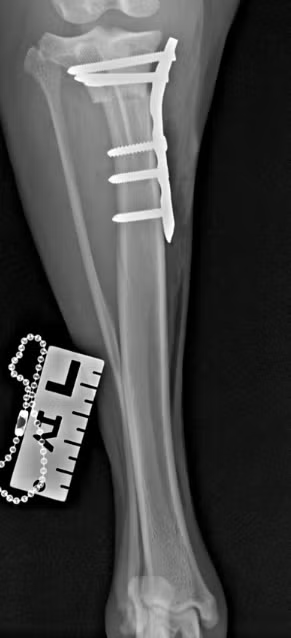
8-Weeks Post-Surgery
TPLO Surgery at LifeCare Pet Hospital: What Sets Us Apart
LifeCare Pet Hospital is located at 25150 Loudoun County Parkway, Suite 100, Chantilly, VA 20152. We serve dogs from across Northern Virginia including Chantilly, South Riding, Ashburn, Aldie, Centreville, Reston, and Herndon, and we regularly see patients coming from Maryland, Washington D.C., and further out.
What makes our TPLO program different is not one thing. It is the combination of Dr. Ahluwalia's experience and credentials, our commitment to straightforward all-inclusive pricing, our ability to get your dog into surgery quickly, and the level of personal care you receive from start to finish. Dr. Ahluwalia takes the time to make sure you fully understand your dog's diagnosis and what TPLO recovery looks like before any decisions are made. You will not feel rushed or left with unanswered questions.
If you want to find out whether TPLO surgery is the right option for your dog, we are glad to talk through your pet's situation and help you make the best decision.
Call (703) 643-9818 or Book Your TPLO Consultation Online
Frequently Asked Questions About TPLO Surgery for Dogs
How much does TPLO surgery cost for dogs?
In Virginia, Maryland, and the D.C. area, the cost of canine TPLO surgery typically falls between $5,500 and $8,500 depending on the hospital and what is included. At LifeCare Pet Hospital, we charge one all-inclusive price covering your consultation, pre-op blood work, the tibial plateau leveling osteotomy, anesthesia, hospitalization, and eight-week post-op x-rays. Call (703) 643-9818 for current pricing specific to your dog.
What is the difference between a CCL tear and an ACL tear in dogs?
They are the same type of injury. In people it is called an ACL tear because we stand upright and the anatomy is described in anterior and posterior terms. In dogs, the correct term is CCL (cranial cruciate ligament) because of how dogs move on all fours. The mechanics of the injury are similar, but TPLO surgery is designed specifically for canine anatomy.
What is TPLO and how does it compare to other cruciate surgeries?
TPLO (Tibial Plateau Leveling Osteotomy) is the gold standard for treating CCL tears in dogs. Rather than replacing the torn ligament, TPLO changes the angle of the tibial plateau so the stifle joint becomes stable without it. It has a stronger long-term track record than extracapsular (lateral suture) repair or TTA surgery, particularly for larger and more active dogs.
What is CCL disease in dogs?
CCL disease is the gradual degeneration of the cranial cruciate ligament over time, as opposed to a single traumatic tear. It is actually the most common reason dogs develop CCL tears, especially in middle-aged and older dogs and in breeds with a structural predisposition. Dogs with CCL disease tend to show a slow-building lameness rather than a sudden injury. TPLO works equally well for CCL disease as it does for acute ruptures.
What is the stifle joint?
The stifle joint is the veterinary term for a dog's knee. It is the joint that connects the femur (thigh) to the tibia (shin). When we discuss CCL tears and TPLO surgery, the stifle is the joint we are operating on.
How long does TPLO recovery take?
Most dogs recover over an eight to twelve week period following tibial plateau leveling osteotomy. Bone healing is gradual, and activity is increased incrementally under Dr. Ahluwalia's guidance. Eight-week x-rays confirm healing progress and are included in the cost of surgery at LifeCare Pet Hospital.
What should I expect after TPLO surgery?
The first two weeks are the most restrictive. Most dogs begin touching the foot down within a day or two of surgery, which is a good sign, but overall rest is critical. Weeks three through six introduce controlled leash walks as healing progresses. By weeks eight through twelve, most dogs are cleared for progressively more activity based on their x-ray results. Dr. Ahluwalia provides a custom rehab plan and exercise video tutorials for every patient.
Can a partial CCL tear heal without surgery?
Partial CCL tears almost always progress to complete ruptures without treatment. Delaying dog knee surgery increases the risk of meniscal damage, accelerated arthritis, and longer-term pain. Early surgical intervention gives the best outcomes.
Will my dog tear the other CCL?
Roughly 40 to 60 percent of dogs who tear one CCL will eventually tear the other as well. This is largely because they compensate by putting more load on the healthy leg while protecting the injured one. Prompt TPLO surgery reduces but cannot eliminate that risk.
Can I schedule my consultation and surgery the same day?
Yes, in many cases. We offer same-day consultation and surgery options, particularly for clients traveling from out of the area. Call our team to find out what is possible for your dog.
What is the success rate for TPLO surgery in dogs?
Tibial plateau leveling osteotomy has a success rate of approximately 95 to 97 percent. Most dogs begin bearing weight on the operated leg within the first few days of surgery and return to full, comfortable activity within the eight to twelve week recovery window.