
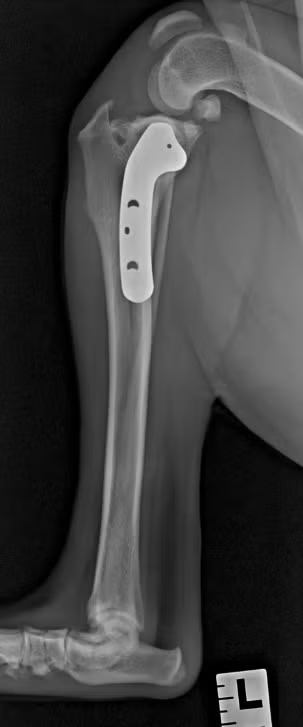
TPLO and Dog Orthopedic Surgery Recovery Guide (Chantilly, VA)
If your dog has recently undergone orthopedic surgery—such as TPLO (Tibial Plateau Leveling Osteotomy), ligament repair, or joint surgery—you’re probably wondering how to ensure a smooth, complication-free recovery.
At LifeCare Pet Hospital in Chantilly, VA, we guide pet owners through every stage of recovery to help dogs heal safely, comfortably, and as quickly as possible. The success of your dog’s surgery doesn’t just depend on the procedure—it depends heavily on what happens at home afterward.
This guide will walk you through exactly what to do (and what to avoid) during your dog’s recovery period.
Follow Your Veterinarian’s Instructions Closely
After surgery, you’ll receive detailed discharge instructions from your veterinarian. These are tailored specifically to your dog’s procedure, age, and condition.
While it may be tempting to compare advice with friends or online forums, your veterinarian’s guidance should always take priority.
At LifeCare Pet Hospital, we encourage pet owners to:
-
Read all discharge instructions carefully
-
Ask questions before leaving the clinic
-
Call us if anything seems unusual during recovery
Even small deviations—like missed medications or too much activity—can delay healing or lead to complications.
Restrict Activity (This Is Critical)
The most important part of recovery after orthopedic surgery is limiting your dog’s movement.
Even if your dog seems to feel better within a few days, their surgical site is still healing internally.
Your dog must avoid:
-
Running or jumping
-
Climbing stairs
-
Rough play
-
Off-leash activity
Too much movement too soon can undo the surgical repair—especially after TPLO surgery.
How to safely restrict activity:
-
Use a crate, playpen, or small room
-
Keep walks short and controlled (leash only)
-
Separate from other pets if needed
In some cases, mild sedatives may be prescribed to help high-energy dogs stay calm.
Manage Pain and Medications Properly
Pain control is essential—not just for comfort, but for proper healing.
Your dog may be sent home with:
-
Pain medications
-
Anti-inflammatory drugs
-
Antibiotics (if needed)
Important tips:
-
Follow dosing instructions exactly
-
Do not skip doses
-
Never give human medications unless directed by us.
You can also use cold therapy (ice packs wrapped in a towel) to reduce swelling in the first few days.
If your dog seems unusually uncomfortable, restless, or refuses to eat, contact your veterinarian.
Protect the Surgical Incision
Your dog’s incision needs to stay clean, dry, and untouched.
Most dogs will instinctively try to lick or chew the area, which can lead to infection or reopening of the wound.
Use an Elizabethan collar (cone)
While not always popular, the cone is one of the most important tools for recovery. Alternatives like inflatable collars may be used if approved by your veterinarian.
Monitor the incision daily for:
-
Redness or swelling
-
Discharge or odor
-
Missing stitches
If you notice any of these signs, contact your veterinary team immediately.
Keep Bandages Clean and Dry
If your dog has bandages:
-
Prevent them from getting wet
-
Cover them during outdoor walks
-
Replace them if they become damp or dirty
Wet bandages can significantly increase the risk of infection and delay healing.
Gradually Reintroduce Activity
Recovery doesn’t end when your dog starts feeling better. Returning to normal activity too quickly is one of the most common causes of complications.
A typical recovery progression includes:
-
Strict rest (first 2 weeks)
-
Short, controlled leash walks
-
Gradual increase in activity
-
Return to normal activity only after veterinary clearance
Depending on the surgery, rehabilitation or physical therapy may be recommended to improve strength and mobility.
At LifeCare Pet Hospital, we often guide owners through structured recovery plans to ensure optimal outcomes—especially for TPLO patients.
Watch for Warning Signs
Contact your veterinarian immediately if you notice:
-
Excessive swelling
-
Bleeding or discharge
-
Loss of appetite
-
Lethargy
-
Sudden limping or worsening mobility
Early intervention can prevent more serious complications.
Why Recovery Matters So Much
Orthopedic surgeries like TPLO have very high success rates—but only when recovery is managed properly.
Rushing the healing process or allowing too much activity too soon can lead to:
-
Implant failure
-
Re-injury
-
Additional surgery
A carefully managed recovery ensures your dog returns to a happy, active life.
Need Help With Your Dog’s Recovery in Chantilly, VA?
If your dog has recently had surgery—or you’re planning a procedure like TPLO—our team at LifeCare Pet Hospital is here to help.
We provide:
-
Advanced orthopedic surgery
-
Personalized recovery plans
-
Ongoing support throughout healing
Your dog’s long-term mobility and comfort depend on proper recovery—and we’re here to guide you every step of the way.
Learn more about TPLO Surgeries for Dogs at LifeCare Pet Hospital HERE